Genius Brain Signal: A Detailed Guide to the Audio Program, Brainwaves & Research
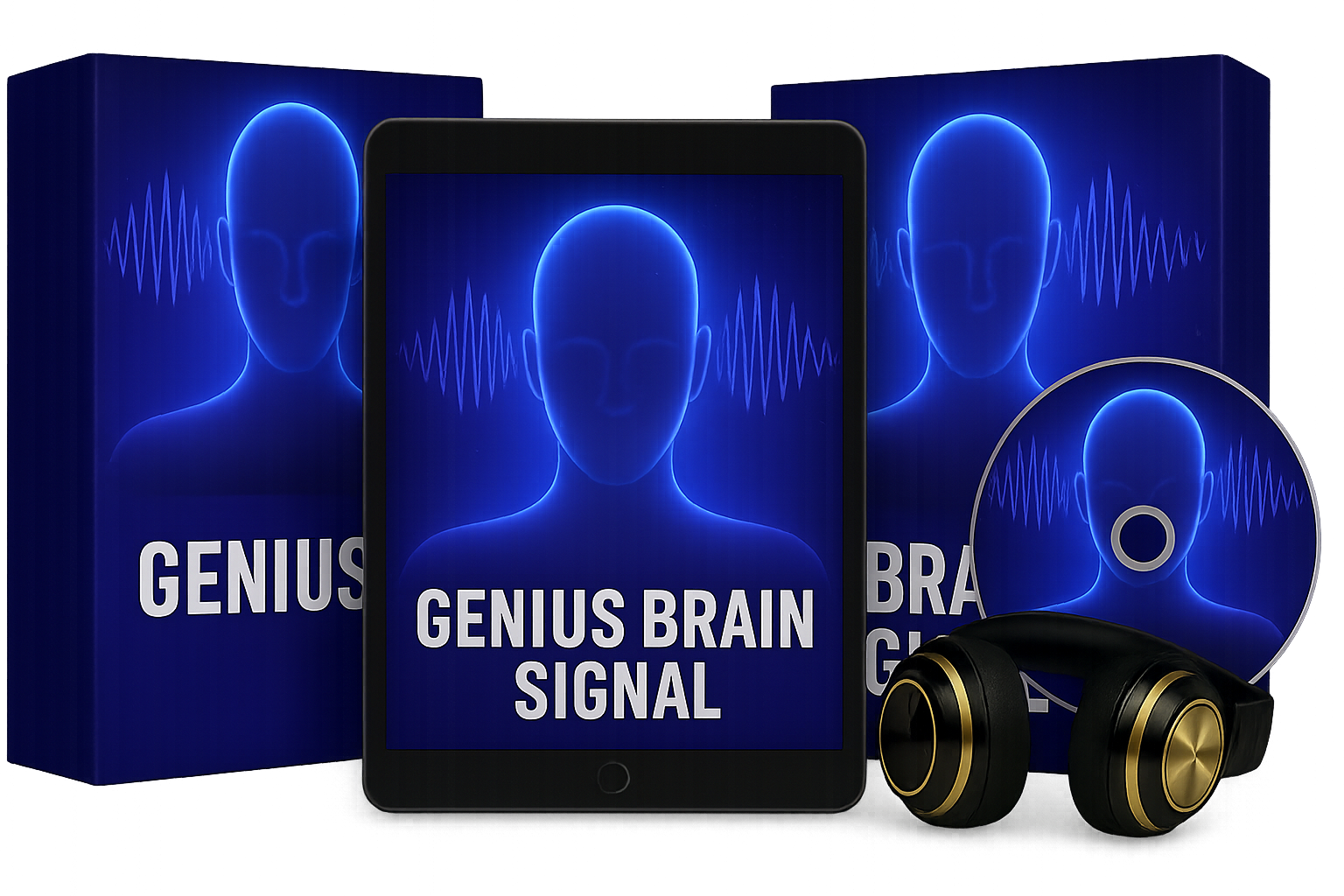
Genius Brain Signal is a digital audio-based program marketed around brainwave and frequency concepts. This guide explains what the program is, what is included, how the underlying concepts are discussed in research, and where product marketing should be separated from independently established evidence.
Check the Current Offer View Official Information
Affiliate disclosure: the first button is an affiliate link. We may receive a commission if you purchase through it.
What is Genius Brain Signal?
Genius Brain Signal is a digital audio-based program marketed around brainwave and frequency concepts. The purpose of this page is to explain what the product is, what is included, how its claims relate to independent research, and what a careful buyer should realistically expect.
The current official offer presents Genius Brain Signal as a digital audio product rather than a physical supplement, device or medication. The core offer is the audio program itself; the bonuses are listed separately below so readers can clearly distinguish the main product from the additional digital materials.
Genius Brain Signal
The central product is presented as a digital audio experience built around brainwave and frequency concepts. The exact current package and access terms should always be verified on the official offer.
Verify current product details →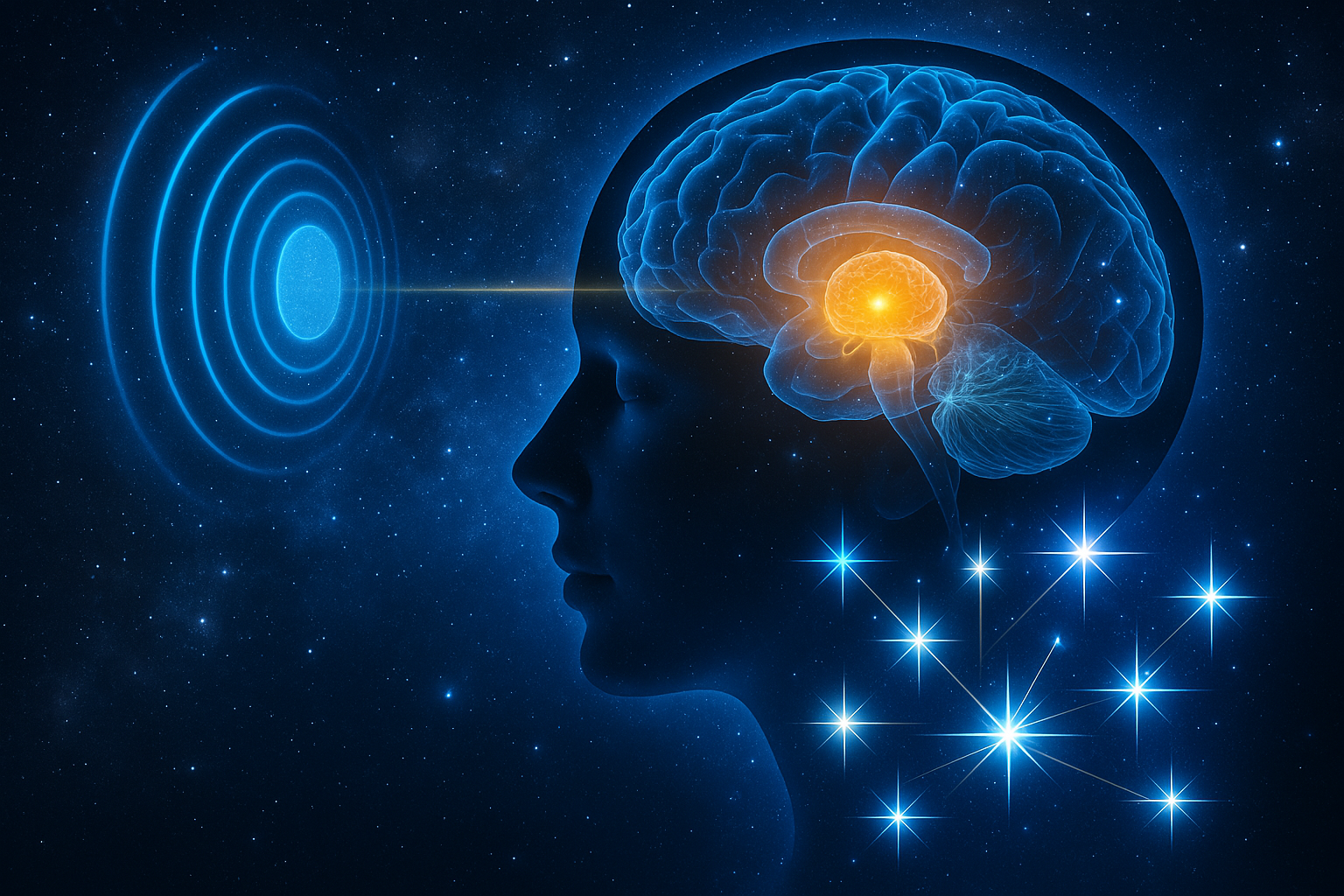
Genius Mode Presentation
This supplied visual represents the listening concept. We do not infer additional product features from artwork alone.
How Does Genius Brain Signal Works?
The most accurate answer is that the product should be evaluated at two different levels. First, there is the question of whether auditory stimulation and binaural-beat style approaches can influence attention, memory, mood or measurable brain activity. Second, there is the much narrower question of whether the exact Genius Brain Signal program reliably produces the outcomes described in its marketing. Those are not the same question.
Independent research provides reasons to take the category seriously without treating it as settled science. A meta-analysis of binaural-beat studies reported an overall medium effect across memory and attention outcomes, while later systematic reviews have highlighted substantial variation between studies. A 2025 study also found EEG evidence of entrainment under particular conditions, but the behavioral findings were not uniformly positive. In other words, there is a legitimate research topic here, but the evidence does not justify assuming that every commercial audio track works in the same way.
For Genius Brain Signal specifically, readers should ask whether the exact audio, duration, listening instructions and claimed outcomes have been tested in controlled, independently replicated trials. Public product pages are useful for documenting what the seller claims and sells, but they are not substitutes for product-specific efficacy studies. This site therefore separates vendor statements from peer-reviewed evidence.
What “Works” Could Mean in Practice
- A listener may find the audio calming or useful as a transition into focused work.
- A short routine may become a consistent cue that reduces friction around starting a task.
- Some listeners may perceive changes in focus or mental clarity, while others may notice little.
- None of these experiences alone proves a specific brainwave mechanism or a universal cognitive effect.
If you choose to test the program, define one measurable goal, keep the routine consistent and compare similar tasks across multiple sessions. That makes the personal experiment more informative than relying on one memorable experience.
Brainwaves: What They Are and What They Are Not
Brainwaves are patterns of rhythmic electrical activity measured by techniques such as EEG. Researchers classify activity into frequency ranges to make discussion and analysis easier. Common labels include delta, theta, alpha, beta and gamma. These categories overlap with complex biological processes rather than representing five simple mental “modes.”
The theta band is often described around 4–8 Hz. A major review of human memory research reports that theta oscillations have long been implicated in learning and memory, while also emphasizing that findings are mixed and depend on experimental and measurement details. This is a more accurate framing than saying that theta is simply the “genius frequency.”
Alpha activity is often discussed around 8–13 Hz, while beta and gamma cover higher frequency ranges. The exact boundaries can vary between studies. In other words, frequency labels are useful scientific shorthand, but they should not be turned into rigid promises about how a person will feel or perform.
If you want a deeper introduction, see our Brainwaves Guide, then continue to Theta Brainwaves Explained. Those pages are part of the site's brainwave content cluster and link back to the product page only where the connection is relevant.
What Are Theta Brainwaves?
Theta is one of the frequency ranges used in EEG research, commonly discussed as approximately 4–8 Hz. Theta oscillations have attracted attention in memory and learning research, but a frequency label by itself does not tell us whether a person is learning better, concentrating better or becoming more creative.
A review titled Theta Oscillations in Human Memory describes theta-frequency fluctuations as being implicated in learning and memory while noting mixed evidence across human studies. The authors emphasize that different experimental contrasts, recording techniques and reference methods can change what researchers observe.
This distinction matters because commercial audio programs may use theta language as part of their positioning. A scientifically careful reader should ask: What frequency was actually used? How was it delivered? Was EEG measured? What was the control condition? What task was tested? Was the study performed on healthy adults, a clinical population, students or another group? And was the same protocol used in the product being considered?
The answer to those questions is often unavailable for commercial programs. That does not automatically mean a product is ineffective; it means the consumer should avoid treating general theta research as direct proof of product-specific results.
For a practical comparison, visit Alpha vs. Theta Brainwaves and our Brainwave Entrainment Explained guide.
Brainwave Entrainment Explained
Brainwave entrainment is a hypothesis and research topic describing the possibility that rhythmic external stimulation can influence or synchronize aspects of neural oscillatory activity. In auditory research, binaural beats are one of the most frequently discussed techniques.
A binaural beat is perceived when two tones with slightly different frequencies are presented separately to the two ears. The listener perceives a rhythmic fluctuation corresponding to the frequency difference. Researchers have explored whether this perceptual phenomenon is accompanied by measurable EEG changes and whether those changes relate to cognition, mood or other outcomes.
The evidence is not one-directional. A 2023 systematic review of studies on binaural beats and brain oscillatory activity included fourteen studies and reported that five were consistent with the entrainment hypothesis, eight were contradictory and one produced mixed results. The review highlighted methodological differences as a major limitation.
More recent experimental work illustrates why protocol details matter. A 2025 study manipulated beat frequency, carrier tone, timing and masking noise in a randomized design. The researchers reported EEG entrainment, but the effect varied with the parameters. Some attention measures changed under a specific condition, while the researchers did not find a simple universal improvement in sustained focus.
So when a commercial program uses terms such as “entrainment,” the sensible interpretation is that it is drawing on a real scientific research area. It does not mean that every audio track, frequency or listening routine has been independently proven to produce the advertised outcome.
What Does Research Say About Binaural Beats and Cognition?
Several systematic reviews and experiments have examined binaural beats in relation to memory and attention. The overall literature is interesting but heterogeneous.
A 2019 meta-analysis in Psychological Research included 22 studies and 35 effect sizes. The authors reported an overall medium, statistically significant effect across the outcomes they analyzed, while also finding that exposure timing and duration contributed to the model. Because the included studies varied in design and outcome, that finding should not be translated into a guarantee for an individual commercial product.
A 2022 systematic review and meta-analysis focusing on memory and attention included fifteen studies and reported an overall medium effect size across the included data. Importantly, the review also described conflicting findings, especially around theta and beta frequencies and different memory or attention tasks.
Another systematic review focused specifically on whether binaural beats reliably change brain oscillatory activity. Its conclusion was cautious: the empirical evidence was inconsistent, and differences in implementation and EEG analysis made comparisons difficult.
A 2025 study provides a useful example of why details matter. Eighty undergraduate participants were randomized across conditions that varied beat frequency, carrier tone, onset timing and background masking noise. EEG measurements supported entrainment, but the pattern varied with the parameters. A particular gamma-frequency condition improved a general attention measure, yet did not reduce the decline in vigilance over time.
There are also studies showing that outcomes can move in different directions depending on frequency and task. One memory study comparing beta and theta binaural beats with white noise reported better recall and recognition measures under the beta condition, while theta exposure reduced some memory outcomes. This is a useful reminder that “theta audio” should never be treated as synonymous with improved memory.
More recent 2026 work has examined theta binaural beats in randomized controlled trials. A systematic review and meta-analysis found that the cognitive studies were too heterogeneous for quantitative pooling, while the authors described low-certainty evidence for some other outcomes. This is a good example of how current research can be promising without being definitive.
For consumers, the most defensible summary is therefore: auditory beat stimulation is scientifically studied, some studies report measurable EEG or cognitive effects, but results depend on the protocol and the evidence is not uniform enough to guarantee a particular result from a particular commercial audio program.
Genius Brain Signal Reviews
Customer Testimonials & Public Feedback
Testimonials can help readers understand the kinds of experiences people describe, but they are not the same as controlled evidence. The official product page currently displays a 4.9/5 rating from 1,768 customers. The vendor also states that customer results are based on a sample set and that results vary, so the rating should be treated as vendor-reported information rather than an independently audited statistic. See the official offer.
“I am a surgeon. My cognitive performance under pressure has always been good but my creative thinking ... has visibly improved.”Published testimonial attributed to “Dr. James R.” on ManifestationRoutine.com
“The decision fatigue reduction is the most practically noticeable effect.”Published testimonial attributed to “Sandra M.” on ManifestationRoutine.com
“Works as advertised if you commit past week one. The effects in week one are subtle.”Published testimonial attributed to “Tom H.” on ManifestationRoutine.com
Third-party testimonial source: ManifestationRoutine.com — Genius Brain Signal. This site is not presented as an independent verification of those testimonials.
Benefits of Genius Brain Signal
Genius Brain Signal is marketed around focus, mental clarity, creativity, learning and a more favorable cognitive state. These are best treated as proposed or potential outcomes rather than guaranteed results. A benefit is meaningful only when it is relevant to a person's actual goal and can be distinguished from ordinary day-to-day variation.
Focus & Attention
A short listening routine may be useful as a cue for starting focused work. Research on binaural beats suggests possible attention effects under some conditions, but results vary across studies.
Relaxation & Mental Reset
Some listeners may enjoy audio as a transition away from distractions. A subjective feeling of calm can be valuable even when it does not establish a specific neural mechanism.
Learning & Creativity
Learning and creative performance depend on many variables. The audio can be tested alongside established habits such as retrieval practice, breaks, sleep and distraction control.
Keep the Claims in Proportion to the Evidence
The strongest marketing language should not be treated as a scientific conclusion. The evidence base for auditory stimulation is mixed, and product-specific evidence is narrower still. A reasonable expectation is therefore that the program may be useful to some people as a structured audio routine, while others may notice little measurable change.
Genius Brain Signal Bonuses
The official sales page currently lists three digital bonuses alongside the core Genius Brain Signal audio. These are presented as part of the current offer, but their availability, exact contents and stated values can change. Check the official page before purchasing.

Genius Brain Signal Quick Start Guide
The supplied artwork identifies this as the Quick Start Guide. It is positioned as an accompanying guide for getting started with the program.
Theta Money Magnet Audio
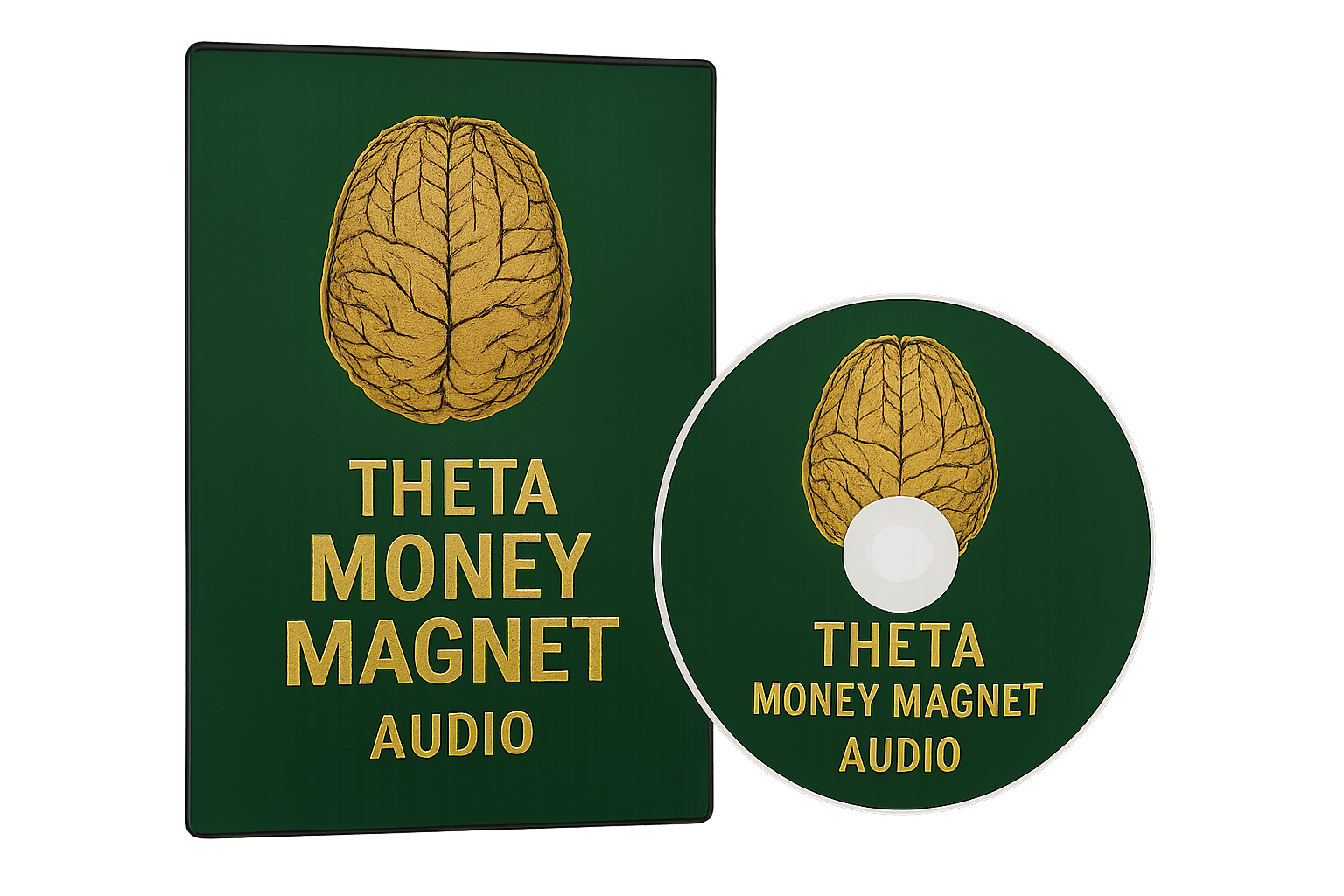
The vendor uses the “Theta Money Magnet” name for this audio bonus. The name is a marketing description and should not be treated as evidence that audio can attract money.

10X Learning Accelerator Guide
The supplied artwork identifies this as a learning-focused guide. We do not attribute specific learning outcomes without independent supporting evidence.
Genius Brain Signal 90-Day Money-Back Guarantee

Purchase Protection, Not a Promise of Results
The current AstralHQ sales page advertises a 90-day money-back guarantee for the digital Genius Brain Signal offer. That means the guarantee is best understood as a refund-policy term attached to the purchase, not as independent evidence that the audio will reliably produce a particular cognitive result.
Because refund procedures, eligibility conditions and offer details can change, verify the live terms on the official sales page before purchasing. If you decide the program is not right for you, follow the seller's current support and refund instructions within the applicable period.
Genius Brain Signal: Product Claims vs. Independent Evidence
One of the core editorial standards of this website is to separate the product's marketing description from independent evidence. The official AstralHQ page uses an attention-grabbing “genius brain” narrative and presents the program as an audio experience. It also states that results are not guaranteed and vary from person to person.
| Topic | How we describe it | Evidence position |
|---|---|---|
| Digital audio program | Vendor-provided product description | Can be verified directly from the official offer. |
| Theta / brainwave concepts | Scientific concepts used in the product's positioning | Theta is a real EEG frequency category; effects of manipulating it through audio are an active research area. |
| Brainwave entrainment | Research concept referenced in auditory stimulation literature | Studies report mixed and parameter-dependent findings. |
| Focus and attention | Relevant consumer goal | Some studies report effects, while others find limited or inconsistent benefits. |
| “Genius” outcomes | Marketing language | Not an established scientific outcome that can be guaranteed by an audio program. |
| Individual results | Official vendor disclaimer says results vary | Consistent with the need to avoid universal claims. |
This table is intentionally conservative. It is more useful to a reader than a page that treats every marketing phrase as a scientific conclusion.
How To Use Genius Brain Signal?
The current offer presents Genius Brain Signal as a digital audio product. The safest way to approach an audio-based program is to follow the seller's current instructions, use comfortable listening volume, and choose a quiet setting when you want to evaluate concentration rather than background noise.
Build a Repeatable Listening Routine
- Choose one consistent time, such as before a study or work block.
- Use the same headphones or listening setup where practical.
- Keep the volume comfortable rather than maximized.
- Pair the session with one clearly defined task.
- Record a brief focus rating and one objective task measure.
Do Not Change Everything at Once
If you start the audio at the same time as a new supplement, major sleep change, productivity system and exercise plan, you will not know what influenced the result. A simpler experiment creates cleaner feedback.
Listen Responsibly
Audio should not be used at unsafe volume or while driving, cycling in traffic, operating machinery or performing another task that requires full environmental awareness. If a listening experience causes discomfort, stop and reassess rather than forcing a session.
Potential Ways Someone Might Use an Audio-Based Program
People may be interested in audio programs for different reasons. Someone might want a structured sound routine while studying; another person might use audio during a quiet break or meditation session; another may simply be curious about auditory stimulation and brainwave research.
As part of a focused work routine
An audio track can become a behavioral cue that marks the beginning of a work session. The usefulness may come partly from routine, environmental consistency and reduced distraction rather than from a uniquely powerful frequency effect. That distinction is worth keeping in mind.
As part of a study routine
Students may be interested in audio while reading or doing repetitive work. Research on binaural beats and cognition is relevant here, but it should not be used to promise higher grades or faster learning. A good study routine still depends on sleep, task design, breaks, active recall and other established learning practices.
For experimentation and personal preference
Some users may simply enjoy the sound or find it relaxing. Subjective preference is legitimate, but it is different from a scientifically demonstrated cognitive effect.
For broader practical advice, visit Focus & Concentration and Build a Focus Routine.
Who Might Be Interested in Genius Brain Signal?
The product may be of interest to adults who are curious about audio-based productivity routines, brainwave concepts, meditation-adjacent audio or the broader topic of auditory stimulation. It may also appeal to readers who want to explore the commercial side of a research area that includes binaural beats and EEG entrainment.
That is different from saying that the product is appropriate for everyone. Individual tolerance, preferences, listening environment and expectations can all affect an experience. The official vendor itself says that results vary and are not guaranteed.
People seeking help for a diagnosed condition should use qualified healthcare resources rather than relying on a commercial audio program. The product should not be represented as a treatment for ADHD, dementia, depression, anxiety disorders, neurological disease or any other medical condition.
Frequently Asked Questions
What is Genius Brain Signal?
Genius Brain Signal is a digital audio-based program marketed by AstralHQ around brainwave, frequency and mental-performance concepts. It is not a physical supplement or device.
Is Genius Brain Signal a supplement?
No. The official product page describes the programs as 100% digital. The offer is not presented as a capsule, powder or other nutritional supplement.
Does Genius Brain Signal guarantee better focus?
No. The official vendor states that results vary from person to person and are not guaranteed. Independent research on auditory stimulation also does not justify a universal guarantee for a commercial program.
Is theta a real brainwave frequency?
Yes. Theta is a commonly discussed EEG frequency range, often around 4–8 Hz. The scientific meaning of theta activity is more nuanced than calling it a single “genius” state.
What is brainwave entrainment?
It is a research concept concerning whether rhythmic external stimulation can influence neural oscillatory activity. Studies of binaural beats and EEG entrainment have produced mixed and parameter-dependent findings.
Are binaural beats scientifically proven to improve concentration?
Research has reported some effects on attention and memory, but findings vary by frequency, protocol and task. Systematic reviews describe heterogeneous and sometimes conflicting evidence.
What bonuses are included with Genius Brain Signal?
The current official offer lists a Genius Brain Signal Quick Start Guide, Theta Money Magnet Audio and 10X Learning Accelerator Guide. Exact contents, availability and promotional terms should be verified on the live official offer.
Is Genius Brain Signal medical treatment?
No. The official page states that its content is not medical or professional advice. This website likewise does not present the product as a treatment for a medical condition.
Where can I verify the current price?
Check the official AstralHQ product page before purchase because pricing, bonuses and terms can change.
How to Evaluate an Audio-Based Cognitive Product
When a digital audio program makes claims about focus, memory or mental performance, a useful evaluation starts with the exact intervention rather than the most impressive phrase on the sales page. Ask what the listener actually receives, what the audio contains, how long the exposure lasts, whether headphones are required, and whether those same parameters were used in an independent study. If the public evidence does not answer those questions, that limitation should be acknowledged.
The next step is to separate a plausible mechanism from a demonstrated outcome. It is reasonable to say that sound can influence perception and that auditory stimulation can be studied with EEG. It is much stronger to say that a specific commercial track reliably produces a specific cognitive state or outcome. The second statement requires direct evidence. General research can provide context, but it cannot automatically validate a branded product.
Study design also matters. A randomized controlled experiment with a suitable comparison condition is more informative than a testimonial. A systematic review can help reveal whether individual studies point in the same direction or whether results are inconsistent. Sample size, participant characteristics, outcome measures, exposure timing and statistical methods can all affect what a study means.
Expectations are another reason to avoid overpromising. If someone believes an audio track will make them exceptionally productive, that expectation can influence how they describe the experience. This does not make subjective improvement “fake”; it means subjective experience and objective performance are different measurements. A careful personal experiment can track both.
A Simple Personal Evaluation Framework
- Define the goal. Choose one measurable outcome, such as uninterrupted work time, completed study questions or later recall.
- Choose comparable sessions. Keep the task, environment and approximate time of day reasonably consistent.
- Record a baseline. Do several sessions without the audio before drawing conclusions.
- Test the audio. Use the product according to its supplied instructions rather than inventing a stronger protocol.
- Compare results. Look for a repeatable difference instead of relying on a single unusually productive session.
- Consider comfort. If the audio is distracting or unpleasant, that is relevant to whether it is useful for you.
This approach also protects against a common mistake: confusing a compelling explanation with evidence that the explanation works exactly as advertised. Brainwave research is valuable precisely because researchers can measure neural activity and behavior under controlled conditions. Consumers can respect that science while still asking whether the commercial product in front of them has been tested directly.
Don't Wait Any Longer! Order Your Discounted Program Now!
Genius Brain Signal Digital Program
The current official offer presents the program as a one-time digital purchase. The displayed package value is $488 and the current displayed purchase price is $37. Prices and terms can change, so verify the live offer before checkout.
Displayed package value: $488
Today's displayed price: $37
The 90-day money-back guarantee is explained in the separate section immediately above. Review the current refund terms before purchase.
Buy Genius Brain Signal NowMore Genius Brain Signal Research Angles
Our Editorial Standard for This Product Page
This page is designed to be useful even for readers who decide not to purchase. Product claims are attributed to the official vendor where appropriate. Scientific statements are supported with independent sources. When research is mixed, we say so. When a product-specific claim cannot be independently verified, we do not turn it into a factual promise.
Learn more about how we research and write content on our Methodology, Sources Policy and Affiliate Disclosure pages.
Sources & Further Reading
- Official Genius Brain Signal information — AstralHQ
- Binaural beats: memory and attention systematic review/meta-analysis — PubMed
- Binaural auditory beats meta-analysis — PubMed
- Binaural beats and brain oscillatory activity systematic review — PubMed
- 2025 parametric study of binaural beats, entrainment and attention — PubMed
- Theta oscillations in human memory — PubMed
- Binaural auditory beats and long-term memory — PubMed
- 2026 theta binaural beat systematic review/meta-analysis — PubMed
- Auditory stimulation, arousal and cognition systematic review — PubMed